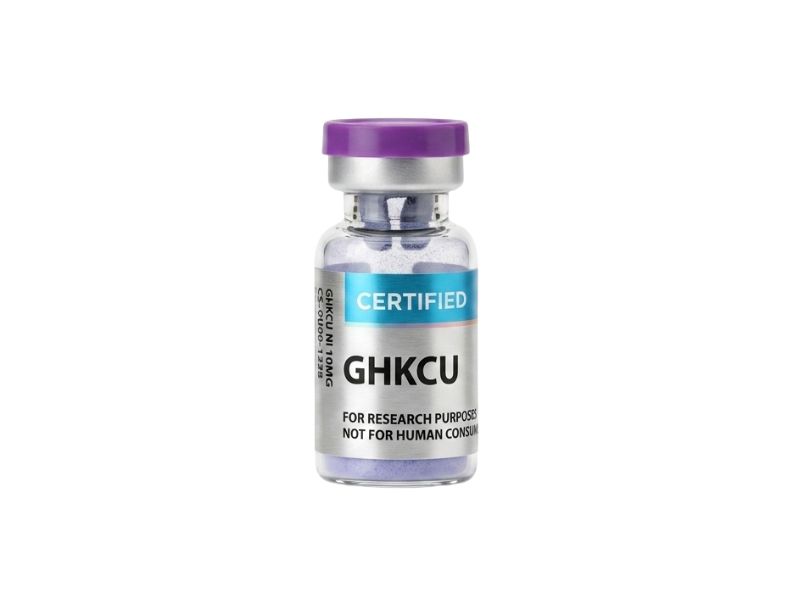
GHK-Cu, or Glycyl-L-Histidyl-L-Lysine copper complex, is a small peptide found naturally in the human body that plays a significant role in cellular signalling, tissue regeneration, and extracellular matrix biology. Researchers value GHK-Cu for its copper-binding capabilities and its activity in cell communication, supporting a range of laboratory studies into molecular pathways and protein interactions.
GHK-Cu is a tripeptide, meaning it is composed of three amino acids: glycine, histidine, and lysine. When these amino acids form a complex with a copper(II) ion, the result is GHK-Cu, a molecule first identified in human plasma and later detected in saliva and urine. The body uses this copper peptide in various regulatory processes, most notably in tissue repair and cellular growth mechanisms.
Historically, GHK-Cu was discovered in the early 1970s. Since then, its ability to bind copper and influence cellular functions has become a central focus of biochemical and medical research. Laboratories now utilise highly pure, synthesised GHK-Cu, such as that available from certified suppliers for research use, to ensure reliable results in controlled experimental settings. This peptide’s molecular formula is C₁₄H₂₂N₆O₄Cu, and its molecular weight is approximately 403.9 g/mol.
GHK-Cu acts as a signalling molecule within the human body. Its primary function is to facilitate cellular communication in processes such as wound healing and tissue remodelling. When copper binds to the GHK peptide, it becomes biologically active, enabling it to regulate gene expression related to the production of collagen, elastin, and enzymes responsible for breaking down old or damaged tissue.
Laboratory research has demonstrated several key mechanisms:
In the research laboratory, GHK-Cu holds interest for its capacity to mimic or influence natural processes related to skin and tissue repair. Common areas of investigation include wound healing, studies on cellular ageing, molecular signalling assays evaluating receptor activity, and analyses of protein interactions involved in matrix breakdown and rebuilding. In practice, researchers often examine matrix remodelling alongside related peptides, for example TB 500 (Thymosin Beta-4, 10 mg), to compare pathways relevant to tissue dynamics.
Because of this versatility, GHK-Cu sees use in basic science projects as well as preclinical studies looking for new ways to support healthy tissue maintenance in various models.
Copper is an essential trace element critical for many biological functions. Its presence in GHK-Cu enables the peptide to act as a potent regulator of enzyme activity and redox balance. The copper ion also enhances the peptide’s biochemical stability and activity, making it an ideal tool for investigating copper-dependent pathways in laboratory models.
Researchers often select copper-peptide complexes like GHK-Cu to study cellular processes that would not occur if the peptide or copper were presented alone.
For laboratory studies, scientists prefer GHK-Cu peptides supplied in lyophilised (freeze-dried) form. This format helps preserve stability, making storage and handling more convenient. High purity is crucial; peptides contaminated with other molecules can introduce experimental variables and reduce reliability of results. When sourcing GHK-Cu for research, always prioritise products that come with third-party testing and a certificate of analysis (CoA) for full confidence in their composition. Many research-grade peptides, for example BPC-157 (10mg), are supplied lyophilised with independent verification data.
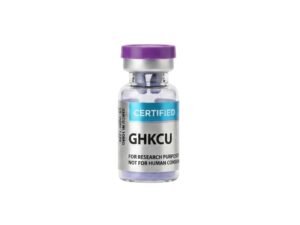
An example of this is the GHK-Cu (GHK-Copper, 50 mg) research peptide, which is supplied at a research grade, thoroughly tested, and suitable for in vitro studies and laboratory applications.
When sourcing GHK-Cu for research, several criteria matter:
Most laboratory experiments with GHK-Cu use cell cultures, tissue samples, or biochemical assays. The peptide is typically dissolved in sterile Bacteriostatic Water (10ml) or a suitable buffer at concentrations that reflect physiological or intended experimental conditions. GHK-Cu’s robust stability and reliable activity have made it a staple in cell signalling and extracellular matrix studies.
Laboratory guidelines stress that GHK-Cu supplied for research is not for diagnostic, therapeutic, or supplement use. It is strictly intended for laboratory experiment protocols.
Recent years have seen expanding interest in GHK-Cu’s applications, particularly in the study of wound healing mechanisms and recovery, the deciphering of molecular pathways in skin biology, exploration of antioxidant and anti-inflammatory properties at the cellular level, and evaluation of its impact on gene expression linked to tissue regeneration.
Because GHK-Cu participates in so many essential cellular functions, it remains at the forefront of peptide and copper biology research.
If you are planning a scientific project or are seeking a reliable GHK-Cu research peptide for your laboratory, detailed product specifications and purity standards are critical. Certified Peptides offers GHK-Cu (GHK-Copper, 50 mg) for research use only, complete with third-party testing and a certificate of analysis, ideal for molecular biology, signalling pathway, or extracellular matrix experiments.
Yes. Each batch is third-party tested and shipped with a CoA and batch identification for traceability.
Research grade, supplied lyophilised for stability, with storage guidance on the label and product page.
Orders are dispatched from within the UK using tracked delivery services. Timings depend on the courier and destination.
No. All products, including GHK-Cu, are for laboratory research use only and not for diagnostic or therapeutic purposes.