Introduction
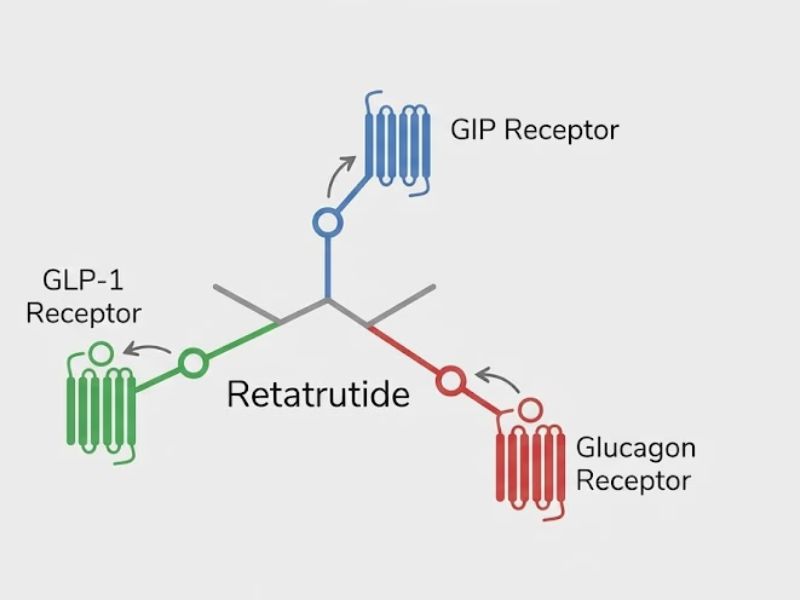
Understanding the retatrutide structure is an important part of exploring how this investigational compound is studied in research settings. Structure plays a key role in determining how peptides behave, interact, and function at a molecular level.
In this guide, we break down the structure of Retatrutide in simple terms, making it easier to understand without requiring advanced scientific knowledge.
What Is Peptide Structure?
Before focusing on Retatrutide specifically, it helps to understand what peptide structure means.
Peptides are made up of chains of amino acids arranged in a specific sequence linked by peptide bonds
This sequence determines how the peptide folds and interacts with biological systems in research environments.
Retatrutide Structure Overview
The retatrutide structure consists of a carefully designed sequence of amino acids. This sequence is engineered to allow the peptide to interact with specific biological targets during laboratory research.
Like many synthetic peptides, its structure is:
- precise
- intentionally modified
- designed for stability and interaction
Even small changes in the sequence can significantly affect how the peptide behaves.
Why Structure Matters in Research
The structure of a peptide directly influences:
- how it binds to receptors
- how stable it is under different conditions
- how it behaves in experimental settings
This is why retatrutide structure is a key focus in peptide research. Scientists study structural properties to better understand how compounds function at a molecular level.
Amino Acids and Sequence Design
At its core, Retatrutide is built from amino acids arranged in a specific order.
This sequence determines:
- the shape of the peptide
- its folding pattern
- its interaction potential
In research, sequence design is critical because it defines how the peptide will perform under controlled conditions.
Structural Stability
Another important aspect of the retatrutide structure is stability.
Peptides can be sensitive to:
- temperature
- light
- environmental conditions
To address this, compounds like Retatrutide are often supplied in lyophilised form, which helps maintain structural integrity during storage and handling.
Structure vs Function (Research Context)
In peptide research, structure and function are closely linked.
Researchers analyse how structural features influence:
- receptor interaction
- signalling behaviour
- molecular response
While Retatrutide is still under investigation, its structure is a key reason it is being studied in laboratory environments.
How Retatrutide Compares Structurally
Compared to simpler peptides, Retatrutide is often discussed in terms of its more complex design.
This includes:
These characteristics make it relevant in ongoing peptide research.
Important Considerations
Retatrutide is an investigational compound and:
- is not approved for human use
- is not intended for medical or therapeutic purposes
- should only be used in controlled research settings
Understanding its structure is part of scientific study, not practical application.
Conclusion
The retatrutide structure plays a central role in how this peptide is studied in research environments. By examining its amino acid sequence, stability, and interaction potential, researchers can gain insight into complex biological processes.
For those exploring peptide research, understanding structure is a key step in building a strong foundation of knowledge